

Diabetic foot care/surgery
Preventive evaluation and advanced treatment for diabetes-related lower extremity concerns
CARE INFORMED BY DIABETIC CHANGES
PROTECTING FOOT FUNCTION OVER TIME
Diabetes can significantly affect foot health by altering circulation, nerve function, and the body’s ability to heal. Over time, reduced blood flow and nerve sensitivity may increase the risk of skin breakdown, infection, and delayed wound healing—often without noticeable early symptoms.
Routine monitoring and early intervention are essential. Even minor concerns can progress quickly when underlying diabetic changes are present, making proactive foot care a critical part of long-term diabetes management.
CARE INFORMED BY DIABETIC CHANGES
PROTECTING FOOT FUNCTION OVER TIME
Diabetes can significantly affect foot health by altering circulation, nerve function, and the body’s ability to heal. Over time, reduced blood flow and nerve sensitivity may increase the risk of skin breakdown, infection, and delayed wound healing—often without noticeable early symptoms.
Routine monitoring and early intervention are essential. Even minor concerns can progress quickly when underlying diabetic changes are present, making proactive foot care a critical part of long-term diabetes management.
CARE INFORMED BY DIABETIC CHANGES
PROTECTING FOOT FUNCTION OVER TIME
Diabetes can significantly affect foot health by altering circulation, nerve function, and the body’s ability to heal. Over time, reduced blood flow and nerve sensitivity may increase the risk of skin breakdown, infection, and delayed wound healing—often without noticeable early symptoms.
Routine monitoring and early intervention are essential. Even minor concerns can progress quickly when underlying diabetic changes are present, making proactive foot care a critical part of long-term diabetes management.
WHEN DIABETIC CHANGES START TO SHOW IN THE FEET
Diabetes can lead to gradual changes in circulation and nerve function that affect how the feet sense pressure and heal from everyday stress. These changes often occur quietly, making early signs easy to overlook.
As sensation decreases and healing slows, even minor irritation or skin damage may become more difficult to resolve. Over time, this can increase the risk of ulcers, infection, and other complications that interfere with mobility.
Recognizing how diabetic changes impact foot health reinforces the importance of routine evaluations and proactive care to help reduce the likelihood of long-term problems.
PREVENTING DIABETIC-RELATED COMPLICATIONS
Diabetic foot complications often develop gradually but can have serious consequences if left unaddressed. Changes in sensation may reduce awareness of pressure points or injuries, while circulation challenges can slow recovery and increase vulnerability to infection.
Consistent foot care focuses on prevention, early detection, and timely treatment—helping reduce the risk of ulcers, infection, and more advanced complications that may affect mobility and overall health.
Diabetic foot complications often develop gradually but can have serious consequences if left unaddressed. Changes in sensation may reduce awareness of pressure points or injuries, while circulation challenges can slow recovery and increase vulnerability to infection.
Consistent foot care focuses on prevention, early detection, and timely treatment—helping reduce the risk of ulcers, infection, and more advanced complications that may affect mobility and overall health.

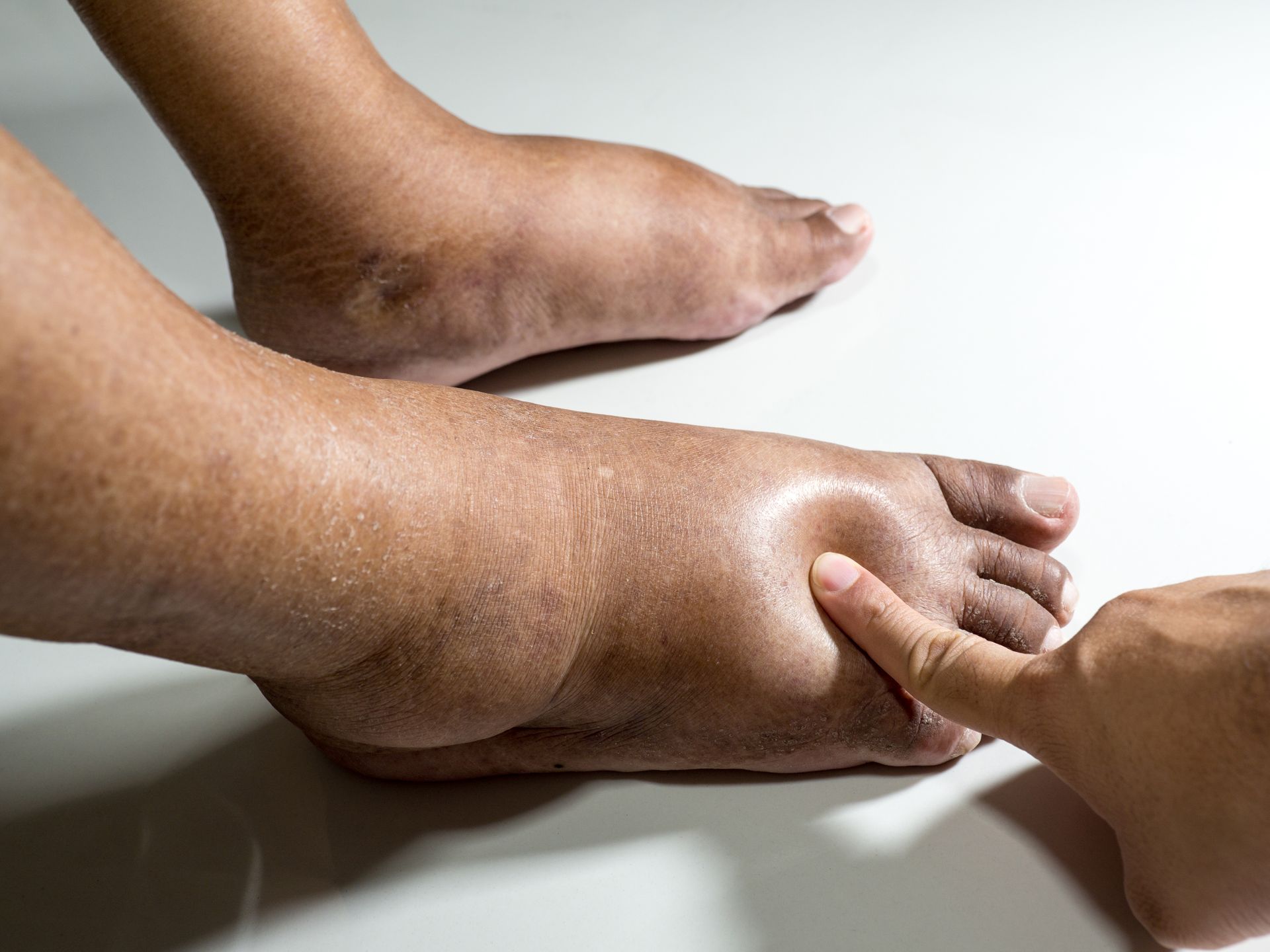


OUR TREATMENT PHILOSOPHY
CARE GUIDED BY DIABETIC RISK FACTORS
Diabetic foot care requires a careful, individualized approach that considers circulation, nerve function, skin integrity, and overall health status. Because diabetes can affect healing and sensation, management is centered on prevention, early identification of risk factors, and timely intervention to help protect long-term foot function.
Care planning is guided by clinical findings, risk level, and how diabetes is impacting the feet over time. This approach allows treatment to be tailored to each patient’s needs, with the goal of minimizing complications, preserving mobility, and supporting overall quality of life.
Conservative Care:
- Routine diabetic foot evaluations and risk assessment
- Monitoring circulation, sensation, and skin condition
- Preventive care to reduce pressure and skin breakdown
- Wound management and ulcer prevention strategies
- Patient education focused on daily foot care and risk awareness
Surgical Solutions:
- Treatment of chronic wounds or infections when necessary
- Correction of structural issues contributing to pressure or breakdown
- Management of advanced diabetic foot complications
- Surgical intervention reserved for cases where conservative care is not sufficient
Surgical recommendations are made with careful consideration of clinical findings, overall health status, and the priority of preserving mobility and limb integrity.
OUR TREATMENT PHILOSOPHY
CARE GUIDED BY DIABETIC RISK FACTORS
Diabetic foot care requires a careful, individualized approach that considers circulation, nerve function, skin integrity, and overall health status. Because diabetes can affect healing and sensation, management is centered on prevention, early identification of risk factors, and timely intervention to help protect long-term foot function.
Care planning is guided by clinical findings, risk level, and how diabetes is impacting the feet over time. This approach allows treatment to be tailored to each patient’s needs, with the goal of minimizing complications, preserving mobility, and supporting overall quality of life.
Conservative Care:
- Routine diabetic foot evaluations and risk assessment
- Monitoring circulation, sensation, and skin condition
- Preventive care to reduce pressure and skin breakdown
- Wound management and ulcer prevention strategies
- Patient education focused on daily foot care and risk awareness
Surgical Solutions:
- Treatment of chronic wounds or infections when necessary
- Correction of structural issues contributing to pressure or breakdown
- Management of advanced diabetic foot complications
- Surgical intervention reserved for cases where conservative care is not sufficient
Surgical recommendations are made with careful consideration of clinical findings, overall health status, and the priority of preserving mobility and limb integrity.
OUR TREATMENT PHILOSOPHY
CARE GUIDED BY DIABETIC RISK FACTORS
Diabetic foot care requires a careful, individualized approach that considers circulation, nerve function, skin integrity, and overall health status. Because diabetes can affect healing and sensation, management is centered on prevention, early identification of risk factors, and timely intervention to help protect long-term foot function.
Care planning is guided by clinical findings, risk level, and how diabetes is impacting the feet over time. This approach allows treatment to be tailored to each patient’s needs, with the goal of minimizing complications, preserving mobility, and supporting overall quality of life.
Conservative Care:
- Routine diabetic foot evaluations and risk assessment
- Monitoring circulation, sensation, and skin condition
- Preventive care to reduce pressure and skin breakdown
- Wound management and ulcer prevention strategies
- Patient education focused on daily foot care and risk awareness
Surgical Solutions:
- Treatment of chronic wounds or infections when necessary
- Correction of structural issues contributing to pressure or breakdown
- Management of advanced diabetic foot complications
- Surgical intervention reserved for cases where conservative care is not sufficient
Surgical recommendations are made with careful consideration of clinical findings, overall health status, and the priority of preserving mobility and limb integrity.